-

Early Hapeville
While Hapeville’s official founding was in 1891, we can trace its story as far back as the early 19th century. A number of early settler families obtained former Indigenous Creek land through the Georgia Land Lottery, including the Thrailkill, Cash, and Manguns Families. It wouldn’t be until the 1860s a dentist supply businessman from Atlanta, Samuel Hape, bought 500 acres to turn into a fruit orchard and tree nursery enterprise that a settlement would begin to grow along the Atlanta & Macon RR.
-

Civil Rights and Workers Rights: an exhibit of Hapeville's Atlanta Assembly Plant
In 1947 the Ford Motor Company opened the Atlanta Assembly Plant in Hapeville. From its inception the plant was intended for an all-white work force until national advocacy and Brown vs Broad of Education changed that. However, the first black workers were largely relegated to custodial positions and denied from well-paying assembly jobs. Under the banner “The Community Builders”, black workers at the plant worked with the UAW to combat racial discrimination in the workplace and for workers’ rights
-

Railroad History
From Hapeville’s inception the railraod played a major role in the history of area. From the initial ‘flag stop’ established in 1875 to the almost hundred years of Hapeville’s active train depot, the railroad defined the community. For more than a century Hapeville residents lived less than a mile from the train depot. The depot was a major stopping point for passenger trains, such as the commuter train from Jonesboro into Atlanta, as well as freight ranging from farm produce to car parts. Today the Hapeville Train Depot stands as a reminder of that intricate history.
-
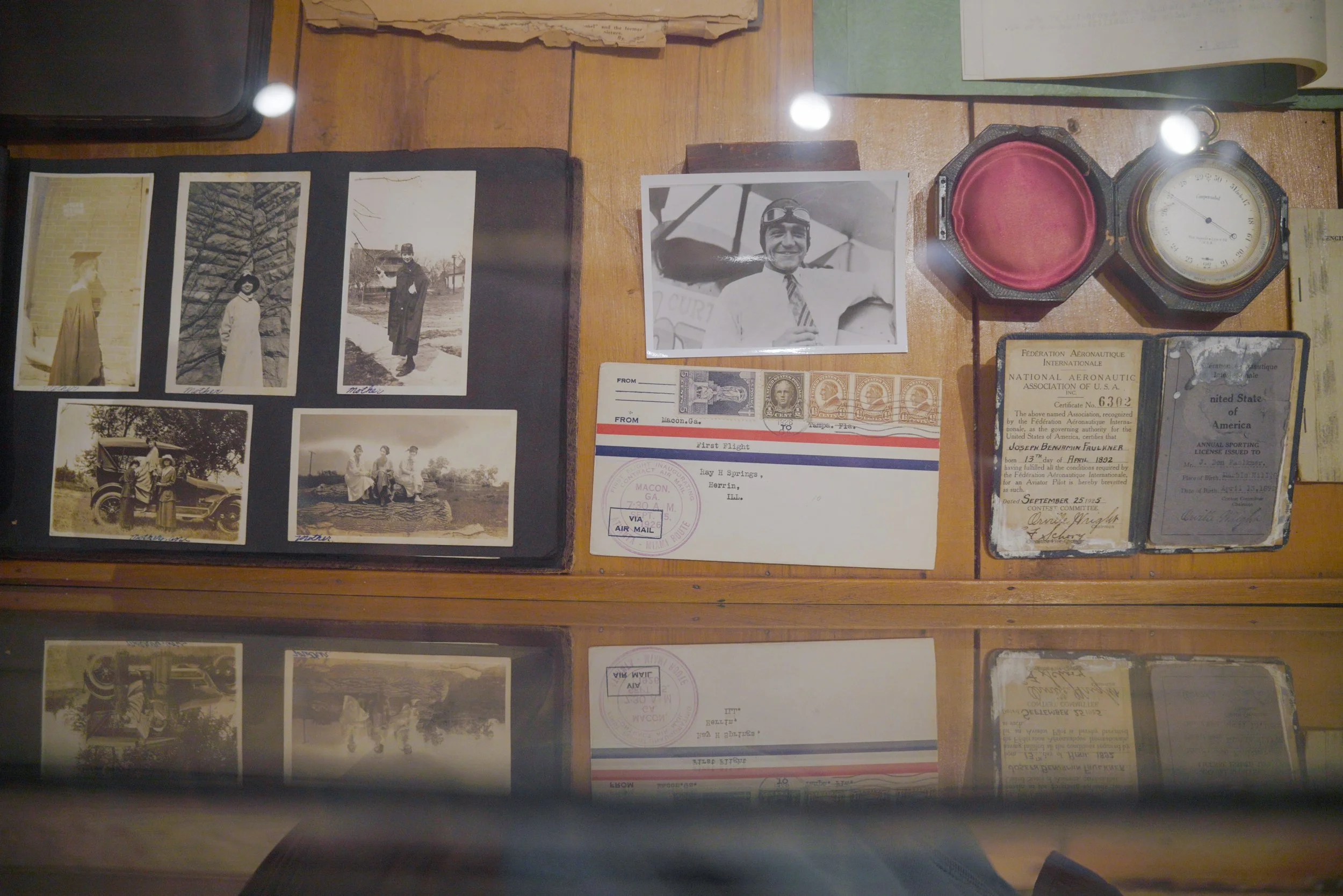
Early Aviation
A special exhibit by Madison Nunes and Lisa Flatherty covering the history of early aviation in Hapeville. Beginning in the 1910s the land that once was Candler Speedway began to be used for the purposes of aviation. Barnstormers, military aviators, air mail pilots, and more slowly turned the former track into an ad hoc airfield. In 1920 two pilots, Beeler Blevins & Doug Davis, established the first hangers, a flight school, aerial photography services, and more. By 1928 through the advocacy of Blevins and Davis the once former racetrack had been obtained by the City of Atlanta to become the city’s official airport.
-
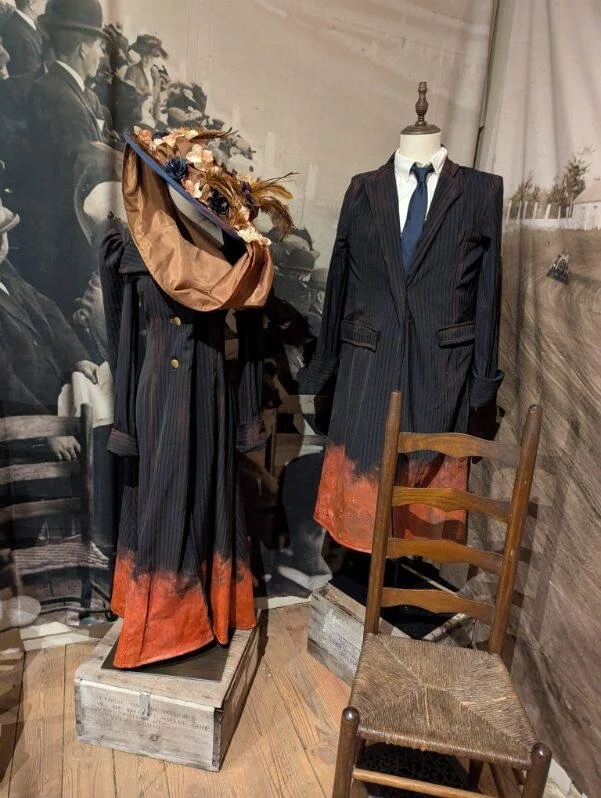
Candler Racetrack
In the summer of 1907 two men, Asa Candler Jr. and Ed Durrant, bought 200 acres of land south of Hapeville. The ground would be converted into Atlanta’s first automobile racetrack. The track would last from 1908 to 1911 but within those short years hundreds of thousands of spectators would observe various races of the groundbreaking technology of the time. Come see our special exhibit by Sarah Butler and Kate Luther covering Candler Racetrack from cars to motorcycles to planes, and the various events that would turn the once quite city of Hapeville into a bustling suburban community
-

Quarry History
Following the end of the American Civil War a new system of race based forced labor was created through convict leasing. The targeting of African Americans by the legal system and leasing convicted felons out to private enterprises, like quarries, defined much of the New South era. This form of coerced labor was implemented at all levels from state to local, including in communities like Hapeville. A special exhibit by Dr. Paulette Richards covers this period and its role in the quarries that built up Atlanta and Hapeville.
-
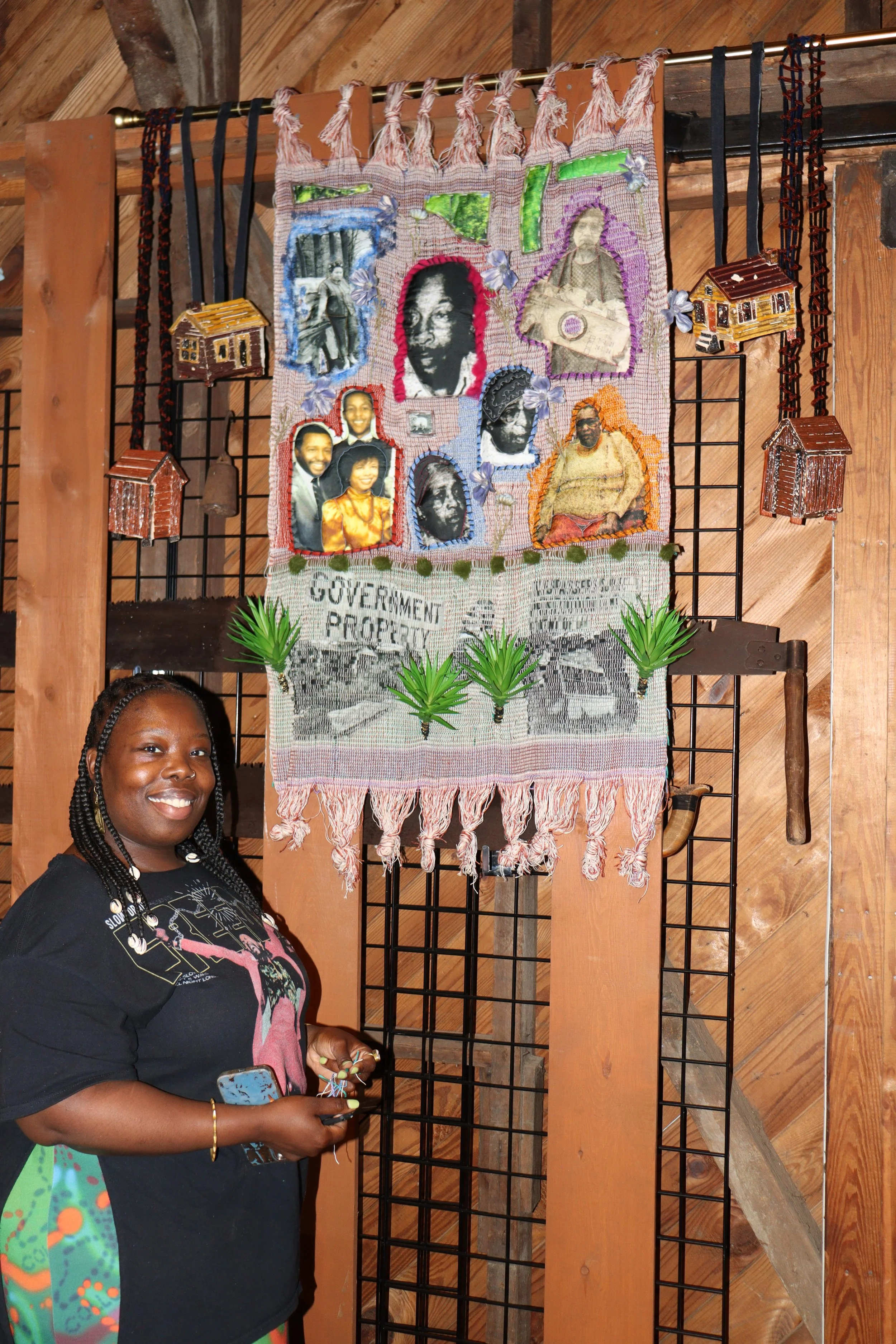
Plunkettown
Founded between the Cities of Hapeville and Mountain View, Plunkettown was born out of the post-Civil War migration of newly emancipated African Americans. Taking its name from the Plunkett Lumber Mill where most of the residents worked Plunketttown was the most prominent African American community in the area. From the 1880s till 1980s the black community hosted its own businesses, church, baseball team and more in Plunketttown. The community would be uprooted by airport expansion but is remembered through our special exhibit by Camisha Butler and Nedra Deadwyler.
-
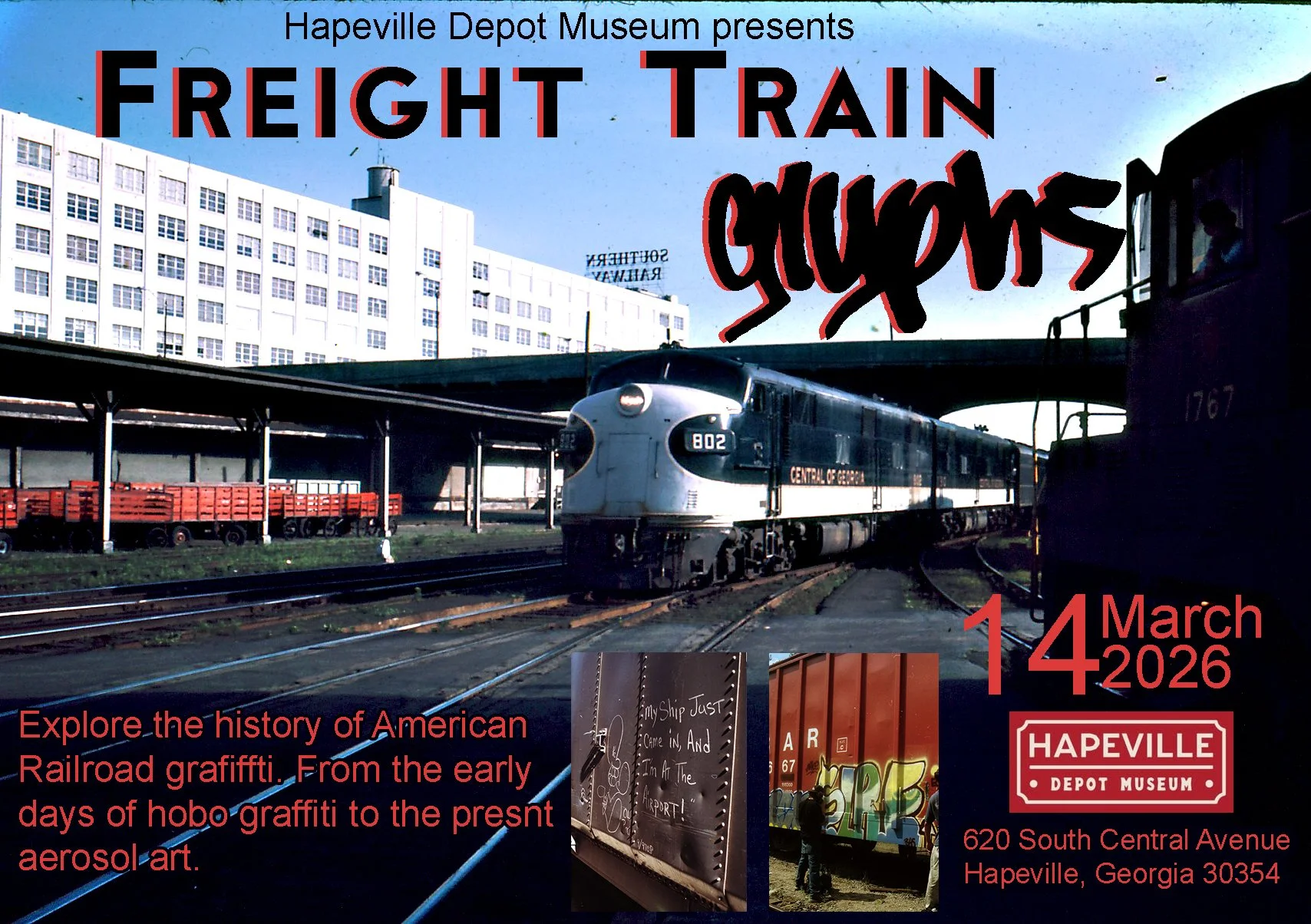
Freight Train Glyphs
A special exhibit by Eddie Farr and Antar Fierce covering the unique ties between the world of train graffiti and the ‘Hobo Code’. The ‘Hobo Code’ was an unofficial language of symbols, monikers, and motifs used by migratory workers in the early 20th century known as Hobos. These symbols were used to communicate across the United States between Hobos, rail workers, and stations masters. This unique subculture would make its way to the graffiti culture of the modern day and find its legacy in the graffiti tags of Atlanta’s railyards.